
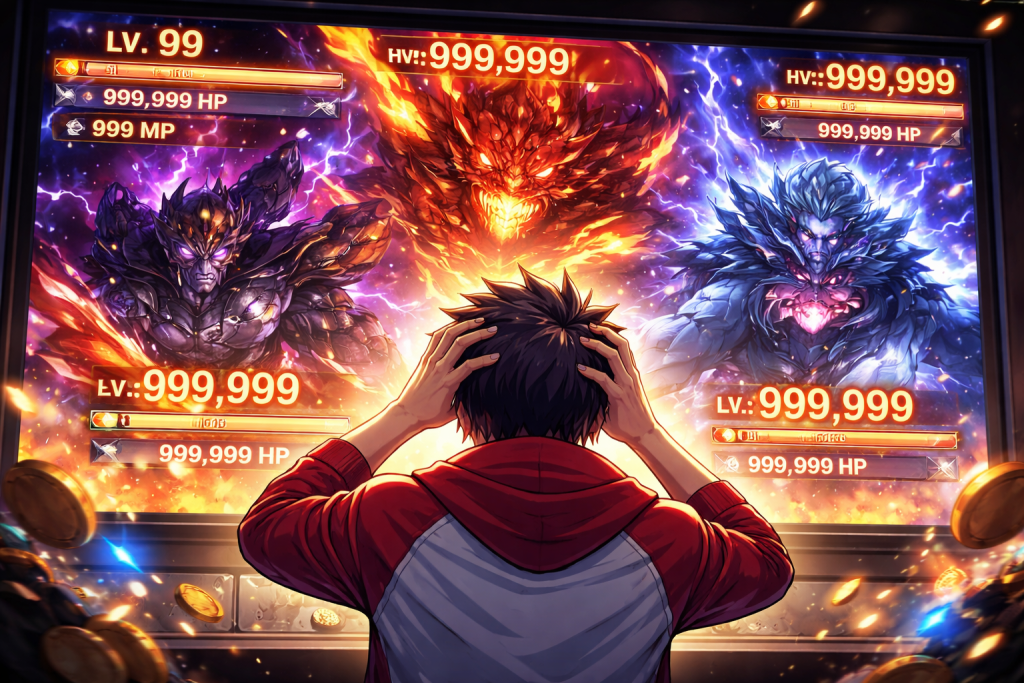
Why Anime Power Scaling Breaks So Many Games
Power scaling is one of anime’s most recognisable traits. Characters grow stronger at dramatic, often exponential rates, unlocking abilities that redefine what is possible within their worlds. While this escalation works well in a narrative medium, it frequently causes serious problems when translated into games. Many anime games struggle not because of poor visuals or weak licences, but because power scaling undermines balance, progression, and player agency.
What Power Scaling Means in Anime
In anime, power scaling refers to the structured increase in character strength over time. Early conflicts establish limits, which are then repeatedly shattered as the story escalates.
Common characteristics include:
-
Sudden leaps in power rather than gradual growth
-
Transformations or forms that dwarf previous abilities
-
Villains designed to outclass everything that came before
This approach sustains tension in long-running series, but it assumes a passive audience. Games, by contrast, require systems that remain coherent under repeated interaction.
Narrative Escalation Versus Mechanical Balance
Anime narratives can afford inconsistency. A character may struggle in one episode and dominate in the next if it serves the story. Games do not have this luxury.
Mechanical balance depends on:
-
Predictable cause-and-effect relationships
-
Clear limits on damage, speed, and survivability
-
Fair interaction between